Cappellacci · Filled pasta
Sea bass cappellacci in a tuxedo: yellow and black pasta
Fish-filled pasta in evening dress
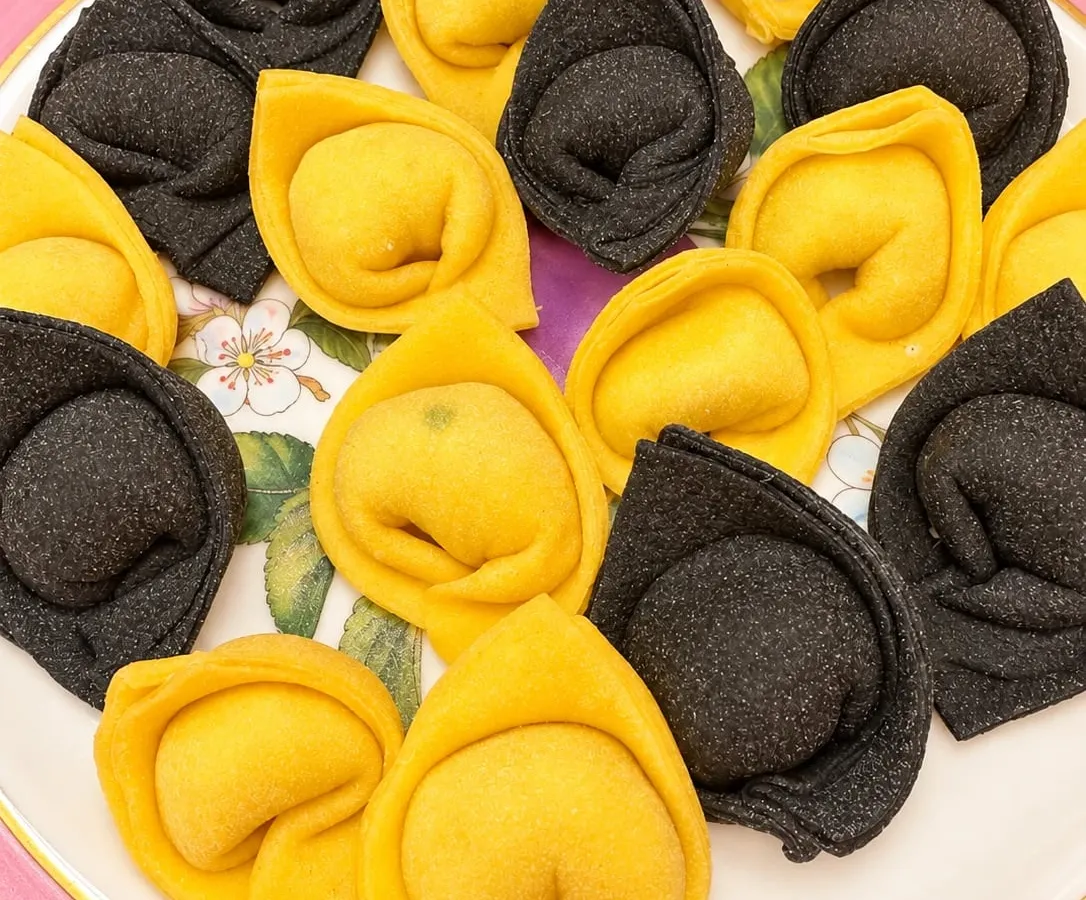
In Romagna cappelletti and cappellacci are at home, and their traditional fillings come from farmhouse cooking: meat, cheese, vegetables. In the second half of the twentieth century the restaurants of the coast brought fish fillings onto their menus too. The seafood version of cappellacci still follows an old logic: on lean days, such as Christmas Eve, Fridays and Lent, a meatless filling was the rule, and fish could take the place of ricotta or meat. These cappellacci draw on the idea of bringing filled pasta into a fish menu, but I created them myself, in my own way.
Why in a tuxedo
The filling is sea bass, delicate and sweet. The pasta is what you see: half yellow, made with egg, and half black, coloured with squid ink. The black brings the taste of the sea, the yellow recalls the sfoglia of always, and together on the plate they add a touch of elegance: like evening dress, which is exactly what «in smoking», in a tuxedo, means.
The sea bass and the filling
Sea bass has white, firm, gently flavoured flesh that does not overpower the pasta and breaks into even flakes. That is why it works so well in a filling. How you cook it matters: a few minutes in boiling water, then about twenty off the heat with the lid on. The fish finishes cooking slowly and stays tender instead of drying out.
Instead of ricotta and eggs, potatoes hold the filling together. Boiled in their skins, as in our potato ravioli, they soak up the moisture of the fish and give a compact filling that does not wet the pasta or escape during cooking. A drizzle of good oil and parsley do the rest: no cheese, which with fish would be too much.
Squid ink pasta
Squid ink comes from the ink sac of the cuttlefish and is sold in sachets, at the fishmonger or the supermarket. You need just 5 grams for 200 of flour, dissolved first in a teaspoon of water so the colour spreads evenly. Of the natural pasta colours it is the most stable: it does not fade in cooking, as we explain in the article on coloured fresh pasta. The black dough is tougher than the yellow: it takes a few more passes of the rolling pin, but it reaches the same thickness.
Closing them as cappellacci
The shape is that of our pumpkin cappellacci: 6.5 centimetre squares, folded into a triangle and closed with the tip raised, like a hat. Work one colour at a time and alternate the yellow and black cappellacci on the plate.
At the table
The dressing is simple on purpose: extra virgin olive oil, a ladle of cooking water to bind, parsley and, if you like, a pinch of white pepper, which is gentler than black and does not speckle the plate. No butter and no cheese, which would cover the fish. For a special occasion you can use a clam sauce instead of the oil. Alongside, a fresh white wine: on the Romagna coast, for instance, a Rebola from the Colli di Rimini.
Ingredients
For the yellow pasta
For the black pasta
For the filling
To dress
Tick the ingredients as you go. Amounts adapt to the number of servings.
Weigh the eggs, find the flour
Flour type the weight
Filled pasta: weight of the eggs × 1.55, for a more elastic sheet that holds the filling. The rule is in the guide to the basic dough.
Method
-
The yellow dough
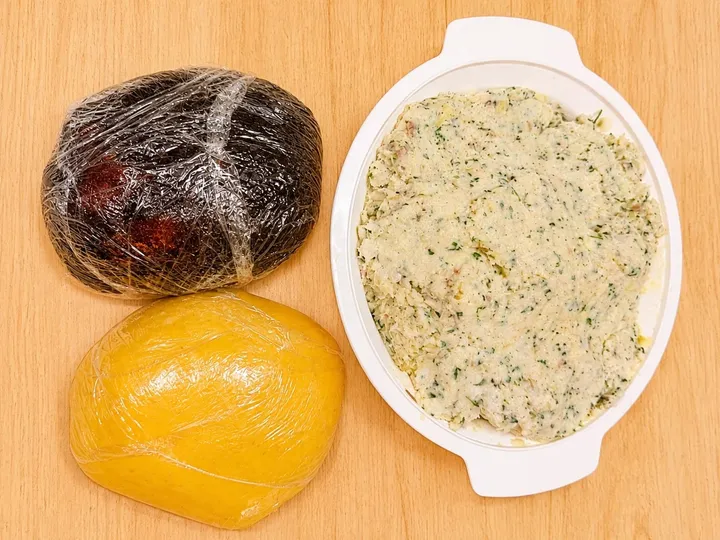
Make the pasta dough with eggs and flour and knead it well until the ball is soft and elastic. Wrap it in cling film and let it rest for 30 minutes.
-
The black dough
Dissolve the squid ink in a small cup with a teaspoon of water, then add it to the flour and eggs and knead as usual. Wrap this ball in cling film too and let it rest.
-
The filling
Bring a pan of water to the boil, salt it lightly and lower in the sea bass fillets; after a couple of minutes turn off the heat, cover with the lid and leave for about 20 minutes. Meanwhile boil the potatoes in their skins and, when a fork goes in easily, drain them and let them cool. Clean the fish, taking great care to remove skin and bones, put it in a bowl and add the mashed potatoes, the chopped parsley and the oil. Mix well until even, season with salt and pepper and put it in the fridge.
-
Rolling and filling
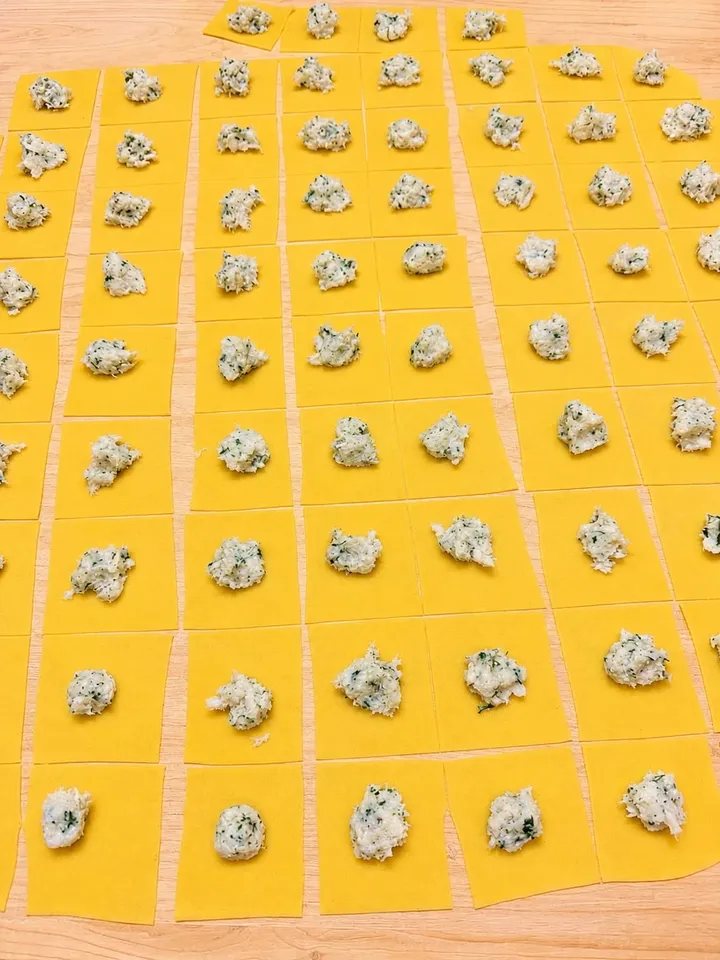
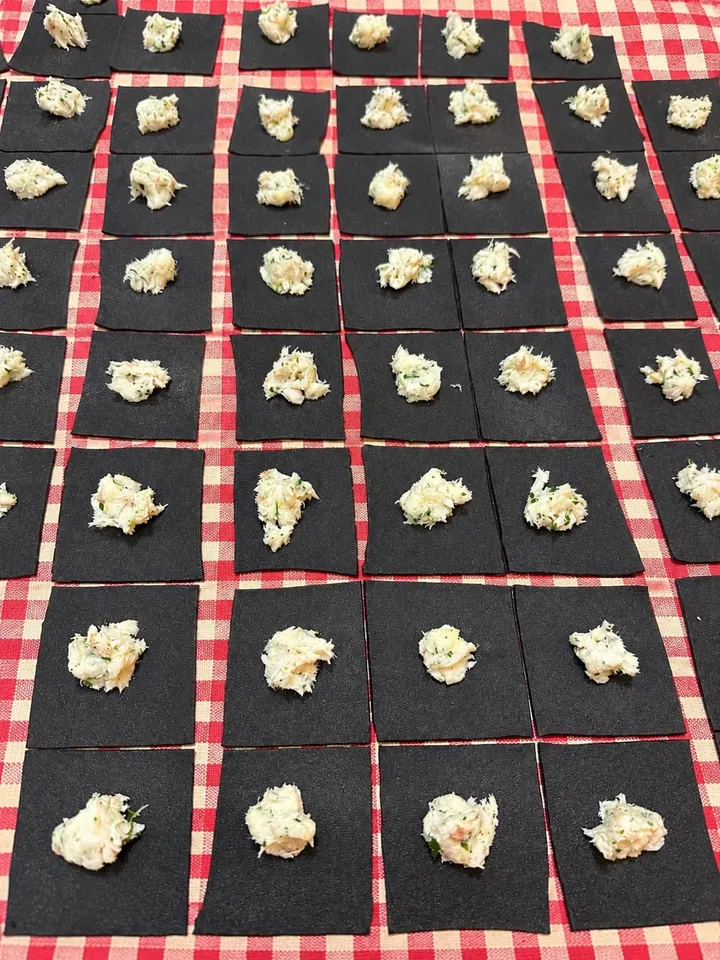
Roll the sheets one at a time: the method is the same for the yellow and the black. Cut squares of about 6.5 centimetres, put a generous walnut-sized piece of filling in the middle of each and close them as cappellacci: fold into a triangle and join the two outer corners, pressing hard, with the tip left standing up.
-
Cooking
Drop the cappellacci into plenty of salted water and let them simmer gently for about 5 minutes.
-
Tossing and serving
Lift the cappellacci out with a spider strainer and toss them in a pan with the oil and a ladle of cooking water. Turn off the heat, sprinkle with very finely chopped parsley and, if you like, a grind of white pepper. Serve at once.
Frequently asked questions
What other fish can I use for the filling?
Whichever fish you like: sole, sea bream, salmon and so on. Either way, choose fish with medium to large fillets, so it is easier to remove every bone.
Do I have to use squid ink?
No, other food colourings are available. With a fish filling, though, squid ink adds a very pleasant briny note.
Why are there potatoes in the filling?
They bind the fish in place of ricotta and eggs and soak up its moisture: the filling stays compact, does not wet the pasta and leaves all the flavour to the sea bass.
Keep kneading
Similar recipes
 Gnocchi
 a sorpresa
Potatoes from the mountains and fish from the sea
 Cappellacci
Pumpkin cappellacci with speck and walnuts
In autumn it is pumpkin time straight away
 Pasta rolls
Salame del Poeta
Pasta cooked inside a tea towel