Spaghetti alla chitarra · First course
Spaghetti alla chitarra with tiny meatballs: the homemade recipe
The pasta born on a frame of strings
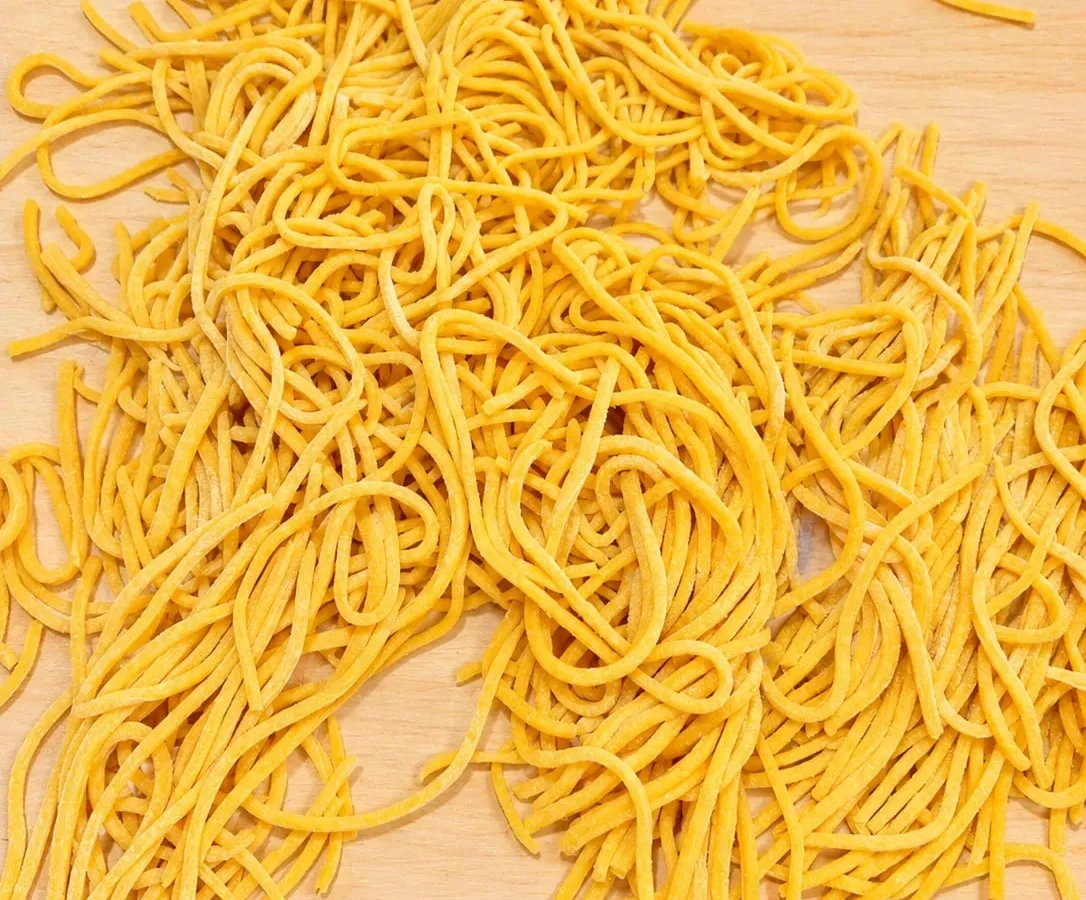
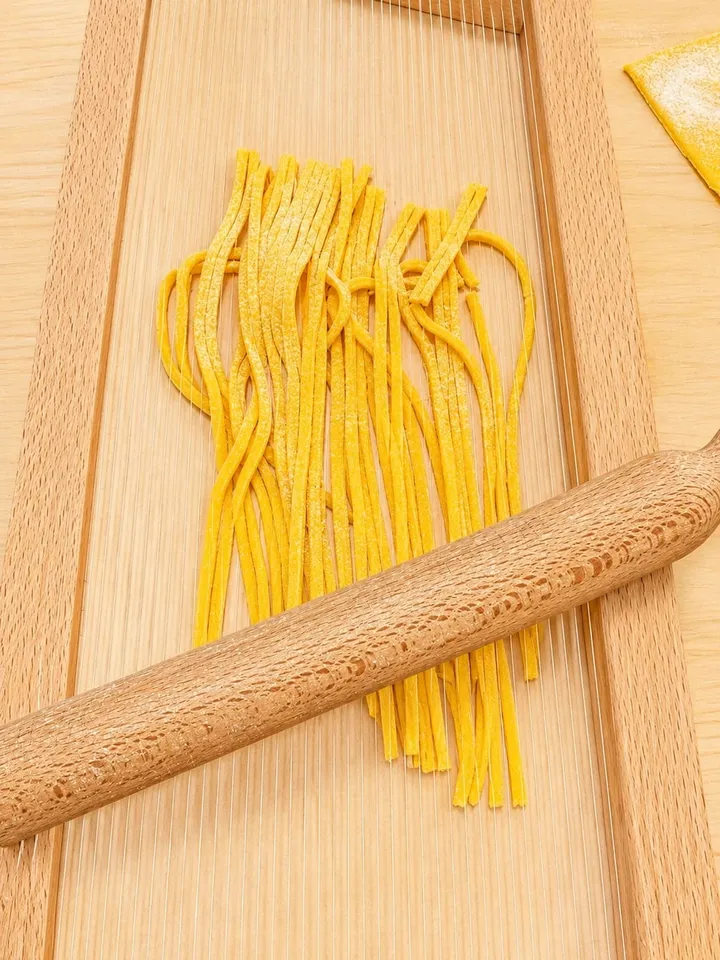
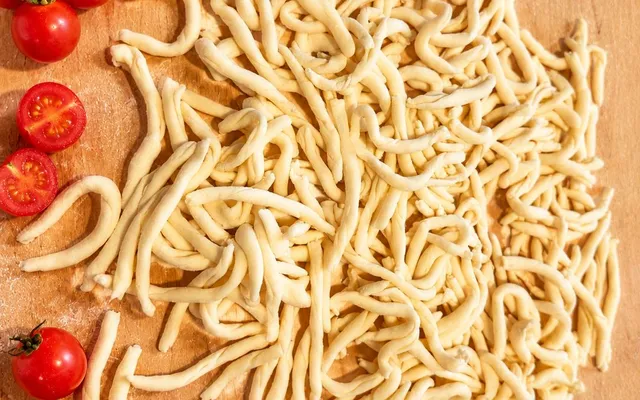
In Abruzzo many homes have a tool that looks like no other kitchen utensil: a wooden frame strung with steel wires stretched like the strings of a musical instrument. That likeness gives it its name: the chitarra, the guitar. But nobody plays this one: it is for cutting pasta. The gesture is simple and hypnotic: pieces of pasta about 20 by 30 centimetres are laid on the strings and pressed with a small rolling pin. The sheet gives way to the wires and splits into long spaghetti with a square section and a rough surface no extrusion die can fully imitate: the sauce clings to the pasta instead of sliding off.
The story
The story of this pasta is written down nowhere: no document says where or by whom it was invented. The first accounts mention it in the nineteenth century and place it in Abruzzo, in the area between Teramo and the Gran Sasso. It was born as the rich Sunday dish of farming families, and its traditional sauces tell the same story: chitarre were originally served with lamb or mutton ragù, or with pallottine, tiny meatballs. They are also excellent with a simple tomato and basil sauce, or with fish sauces instead of the classic tagliolini.
The flour
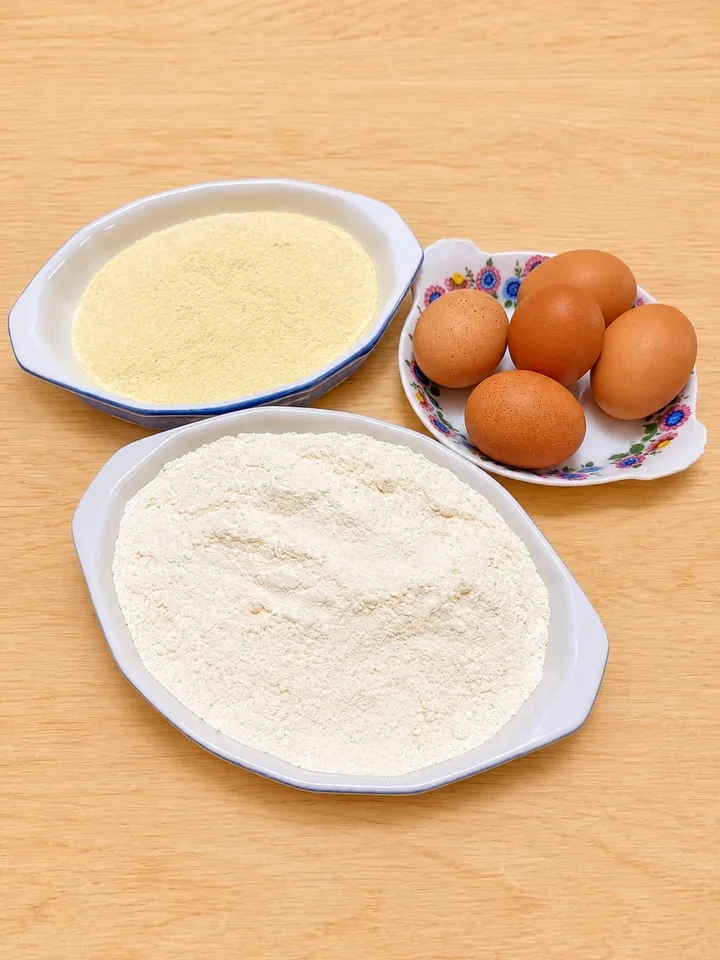
With this pasta we head south from Romagna towards the great durum wheat fields, and that is why the dough is half 00 flour and half fine durum wheat semolina. We explain the difference between the two in the article on 00 flour or semolina for fresh pasta.
The pallottine
For the meatballs we chose a mix of beef and pork, browned quickly in a pan and then dropped into the tomato sauce. They are not meatballs as such, but tiny pallottine, no bigger than a hazelnut.
Cooking
Chitarre need to boil in salted water a couple of minutes longer than ordinary egg pasta, such as tagliatelle, because they are thicker and semolina needs longer to cook.
Ingredients
For the pasta
For the sauce and the pallottine
To dress
Tick the ingredients as you go. Amounts adapt to the number of servings.
Weigh the eggs, find the flour
Flour type the weight
Cut shapes: weight of the eggs × 1.66, the classic sfoglia formula. The rule is in the guide to the basic dough.
Method
-
The pasta
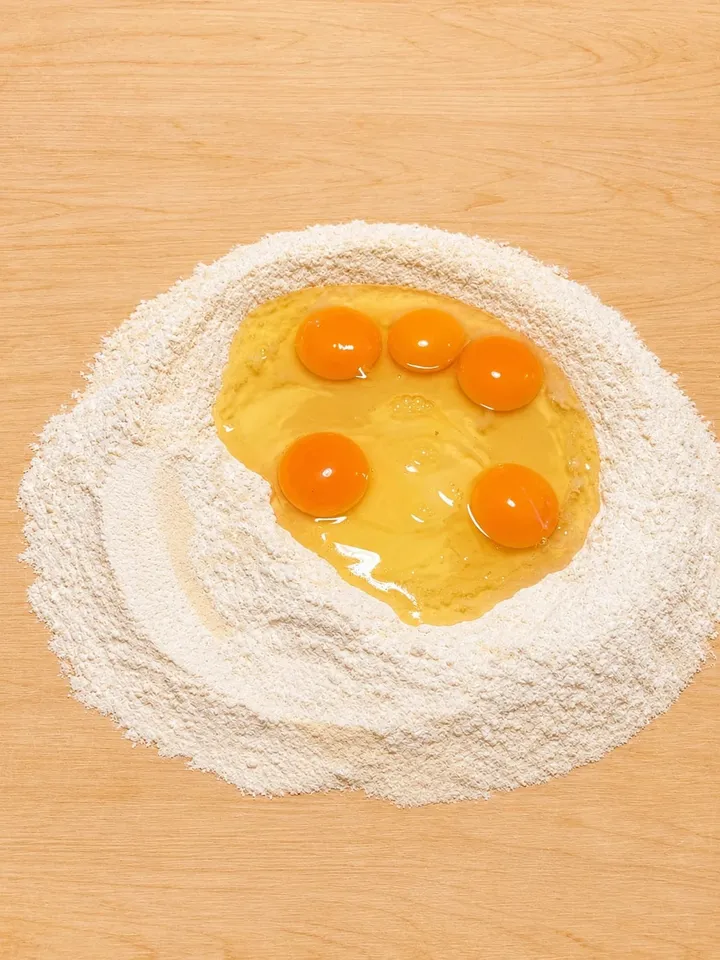
On the board, make a well with the two flours together, put the eggs in the middle and knead, working on until the dough is compact and even: compared with a sheet of 00 flour alone it will be much tougher. Wrap it in cling film and let it rest for about 60 minutes.
-
The sauce
In a saucepan make a soffritto with the chopped celery, carrot and onion and a spoonful of oil, salt it and let the vegetables soften. Add the tomatoes and cook over the lowest heat for at least 45 minutes. If you do not like to feel the pieces of vegetable, blend the sauce with a stick blender once it is cooked.
-
The pallottine
In a bowl combine the two meats, season with salt and pepper and shape very small meatballs, no bigger than a hazelnut, compacting them between your palms. Put them in a pan with a spoonful of oil over medium heat and brown them, shaking the pan all the time. When they are ready, drop them into the tomato sauce. If you like, add a little oregano or a few basil leaves.
-
The chitarre
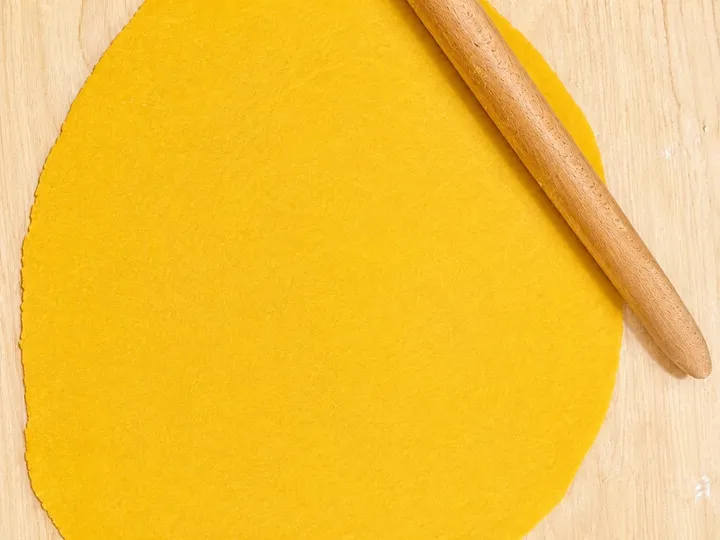
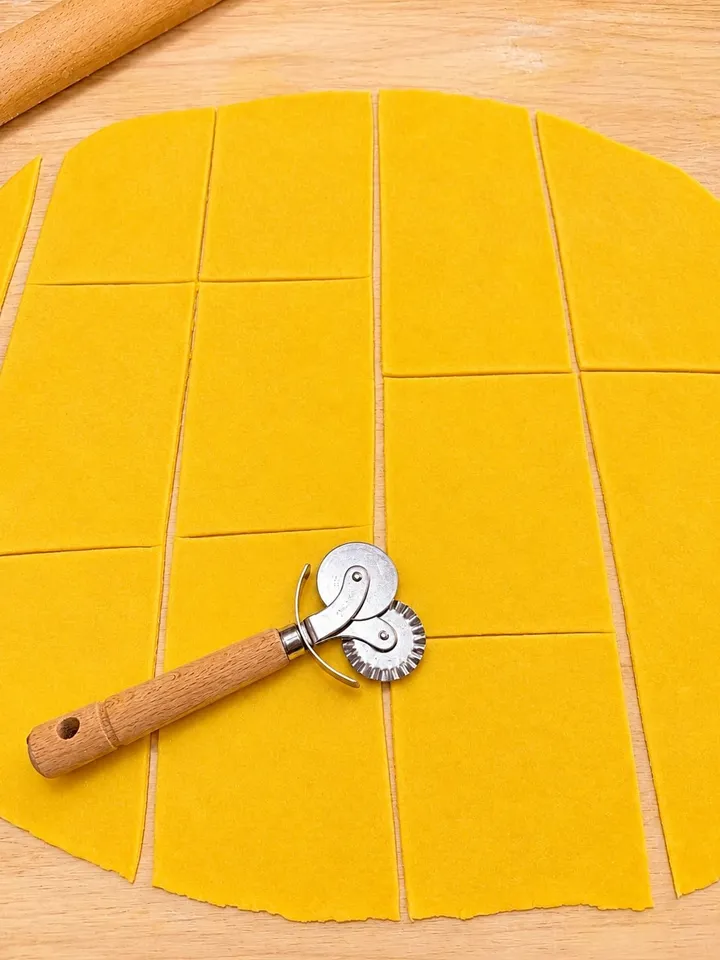
Once the dough has rested, roll out a fairly thick sheet, as much as 4 to 5 millimetres, and cut it into pieces of about 20 by 30 centimetres. One piece at a time, lay the pasta on the chitarra and run the rolling pin over it, gently at first and then firmly, until the strings cut it into long spaghetti with a square section.
-
Cooking
Drop the chitarre into plenty of salted water and let them simmer over moderate heat for about 4 minutes. Lift them out with a spider strainer into a wide pan with the sauce; if needed add a small ladleful of cooking water and toss for a couple of minutes.
-
Serving
Turn off the heat, sprinkle with plenty of Parmesan and serve at once.
Frequently asked questions
Can I use 00 flour only?
It is not advisable: the sheet would be too soft and, when cut, it would stick to the strings of the chitarra instead of being cut.
Can I use semolina only?
Yes, you can. But take care with the kneading and the rest: if they are not done properly the pasta will be uneven, break while you work it or, worse, crumble when cooked.
What is a chitarra?
It is a wooden frame strung with steel wires stretched like the strings of a musical instrument. You lay the sheet on top and press it with the rolling pin: the wires cut it into spaghetti with a square section and a rough surface that holds the sauce.
Keep kneading
Similar recipes
 Baked pasta
Nidi di rondine
Hand-rolled pasta, ham and cheese: one of the dishes of Sunday
 Baked pasta
Baked cannelloni with white ragù and béchamel
They roll into the oven and come out heroes
 Strozzapreti
 romagnoli
The weekday pasta, no eggs and no equipment