Baked pasta
Nidi di rondine: baked pasta rolls with ham and fontina
Hand-rolled pasta, ham and cheese: one of the dishes of Sunday
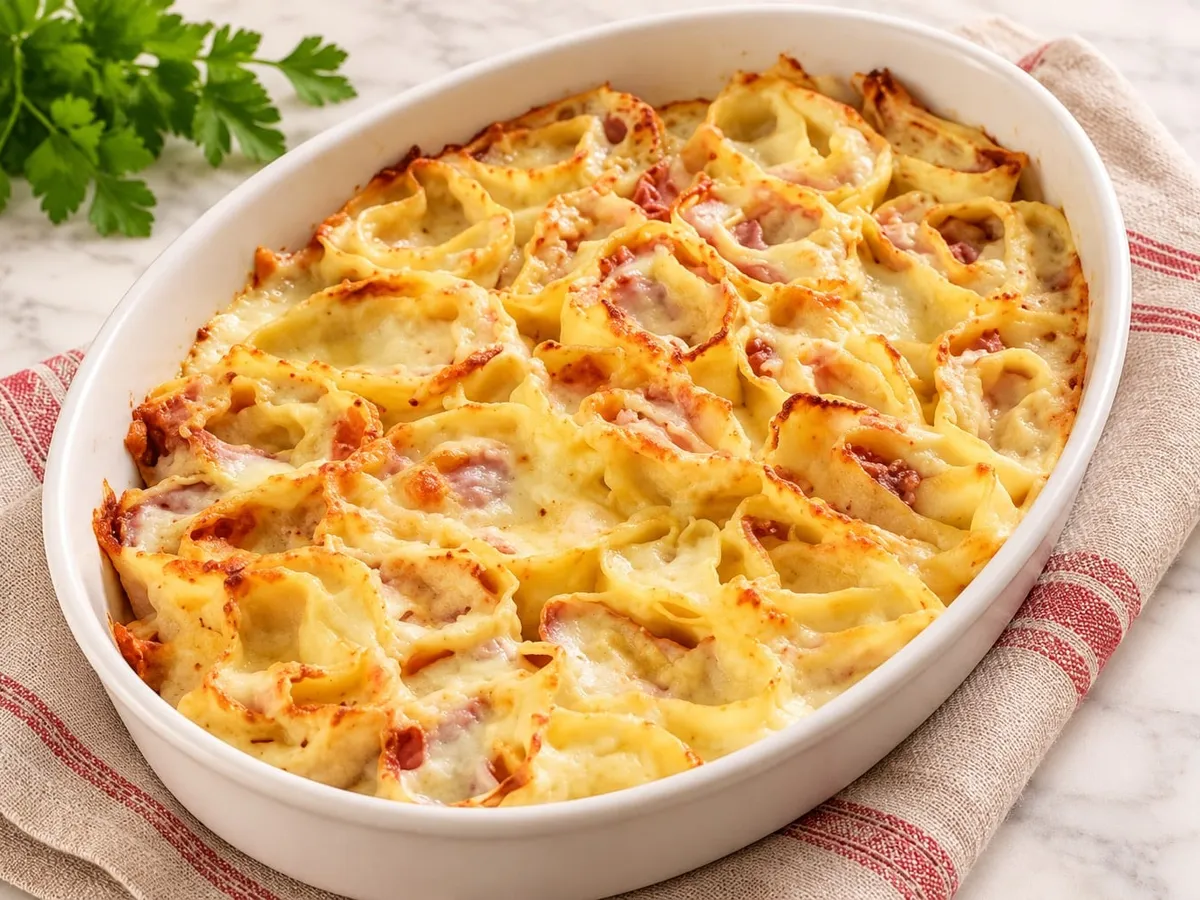
Nidi di rondine, swallow’s nests, also called rosette, are one of the most loved dishes of Sunday cooking in Romagna, even if nobody can say exactly who invented them. Like so many family recipes, they have passed from mother to daughter, from kitchen to kitchen, changing a little each time. Thin pasta, a rich filling of cooked ham and cheese, béchamel wrapping everything, a golden crust from the oven: and the house fills with the smell of it.
Why they are called that
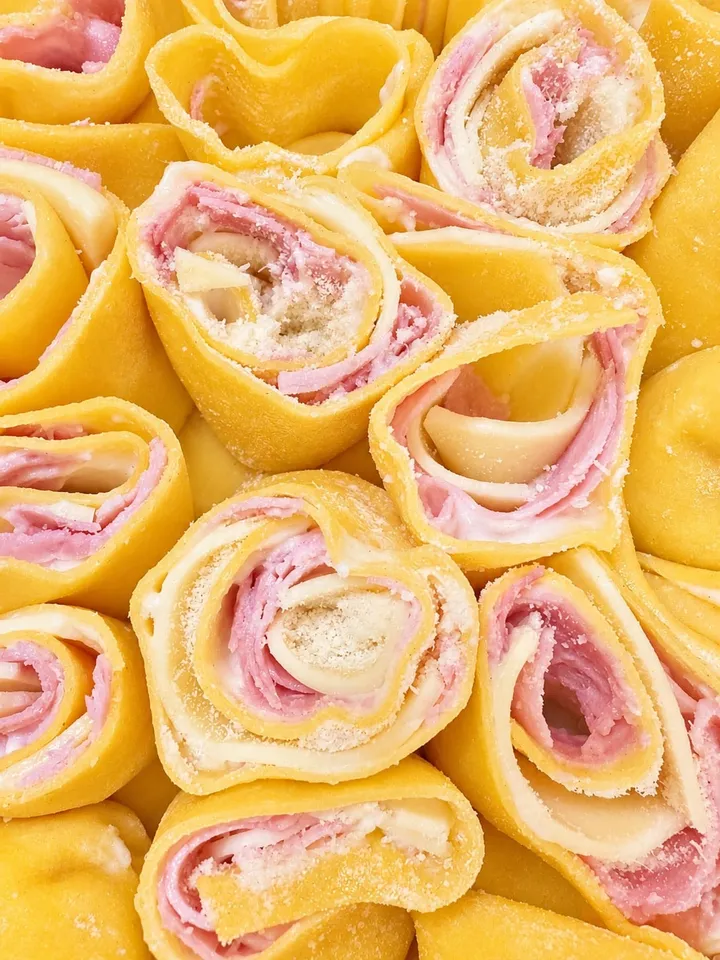
The name comes from the shape. The filled rolls of pasta, stood upright in the dish, look like the nests swallows build every spring under the eaves and in the lofts of country houses. Like all baked pasta, they were born from the idea of celebrating Sunday with the family.
Everyone has their own version
We give you the classic recipe, with cooked ham and melting cheese, but there are many versions: some use mortadella instead of ham, some add mushrooms, some use mozzarella for the cheese, and others fill them with ricotta and spinach, like ravioli.
Ingredients
For the pasta
For the béchamel
For the filling
Tick the ingredients as you go. Amounts adapt to the number of servings.
Weigh the eggs, find the flour
Flour type the weight
Filled pasta: weight of the eggs × 1.55, for a more elastic sheet that holds the filling. The rule is in the guide to the basic dough.
Method
-
The dough
Make the pasta dough with eggs and flour and knead it well until the ball is soft and elastic. Wrap it in cling film and let it rest for 30 minutes. Every stage, photo by photo, is in the guide to the basic dough.
-
The béchamel
Melt the butter in a saucepan, then add the flour all at once and stir until the mixture turns a light amber: technically this is called a roux. Add the milk a little at a time, about a ladleful at a time, stirring constantly: before adding more, the previous milk must be fully absorbed and the mixture smooth again. When all the milk is in, season with salt and add the nutmeg. Cook for another 4 to 5 minutes, turn off the heat and let it cool slightly. You can also make it ahead and let it cool completely.
-
The pasta sheets
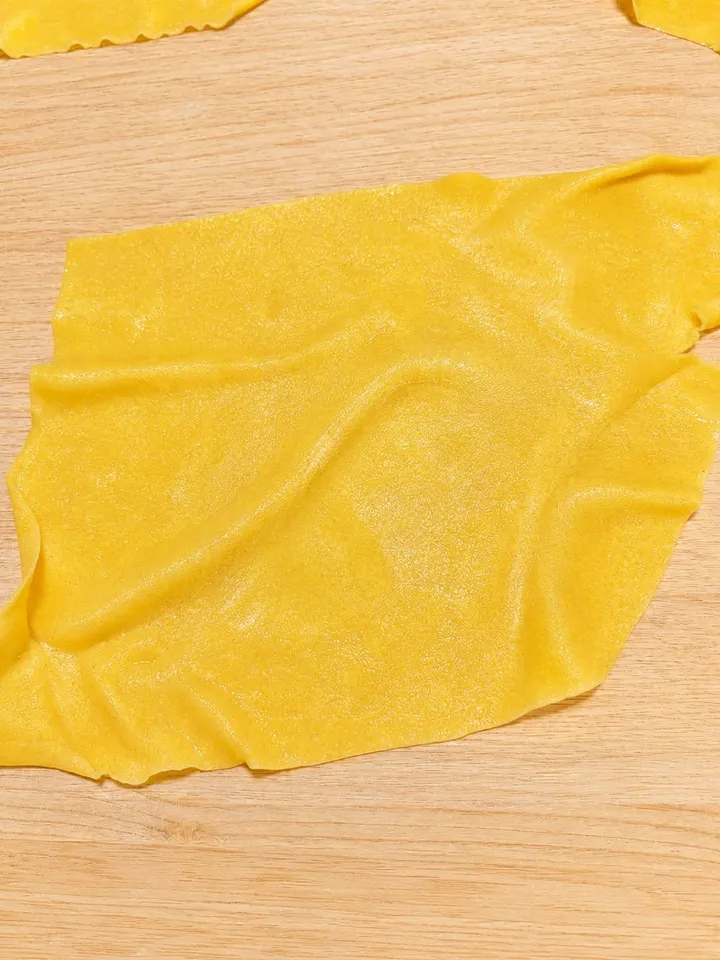
Roll the sheet fairly thin, no more than 0.7 to 0.8 millimetres, and cut it into squares of 25 to 30 centimetres. Blanch the squares in boiling salted water for 1 minute, then pass them through cold salted water. Drain them and lay them to dry on a tea towel.
-
Filling and rolling
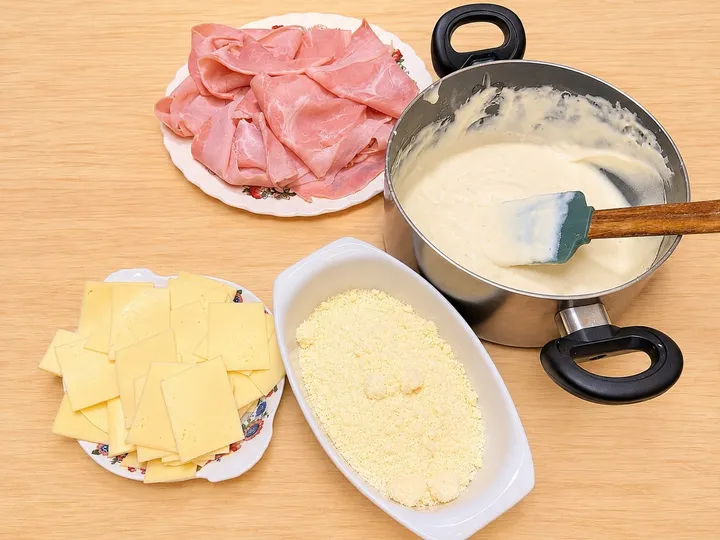
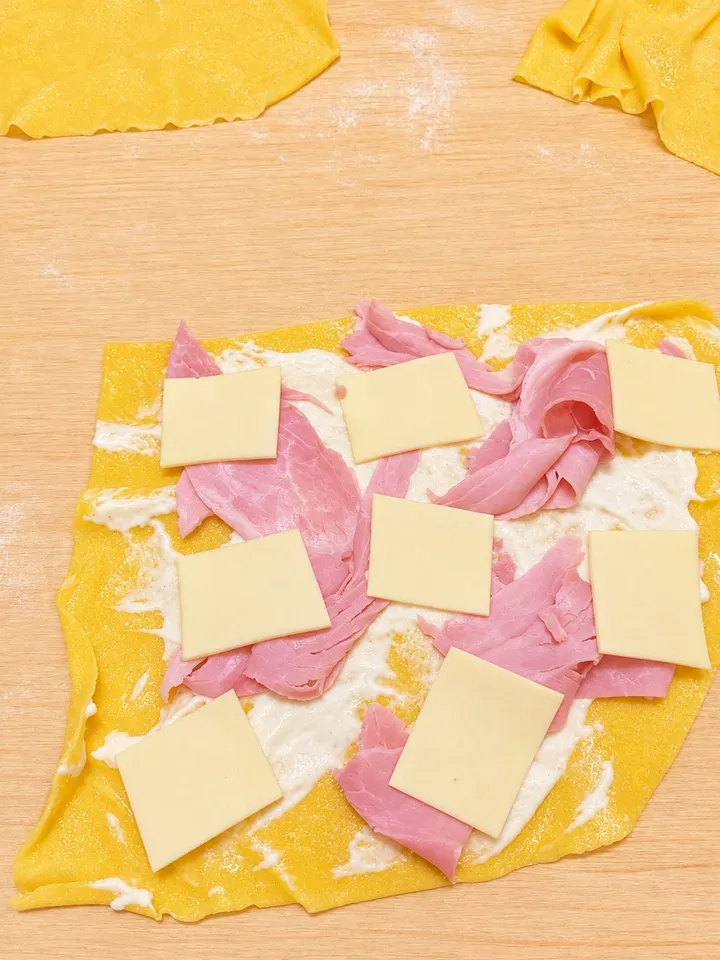
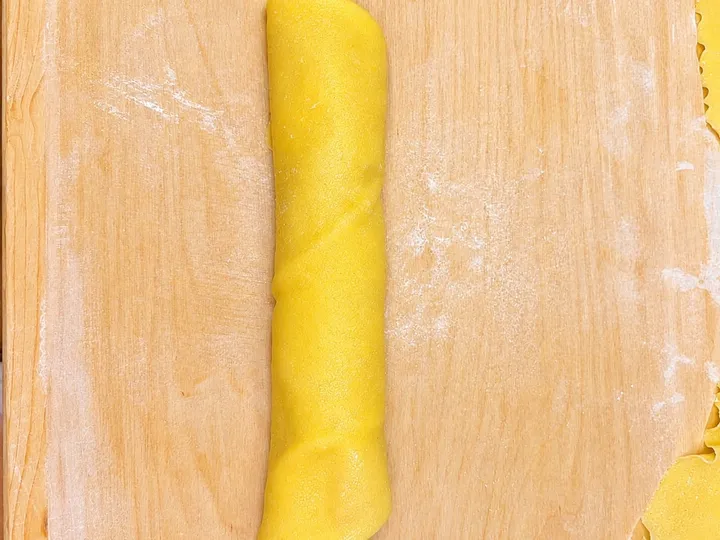
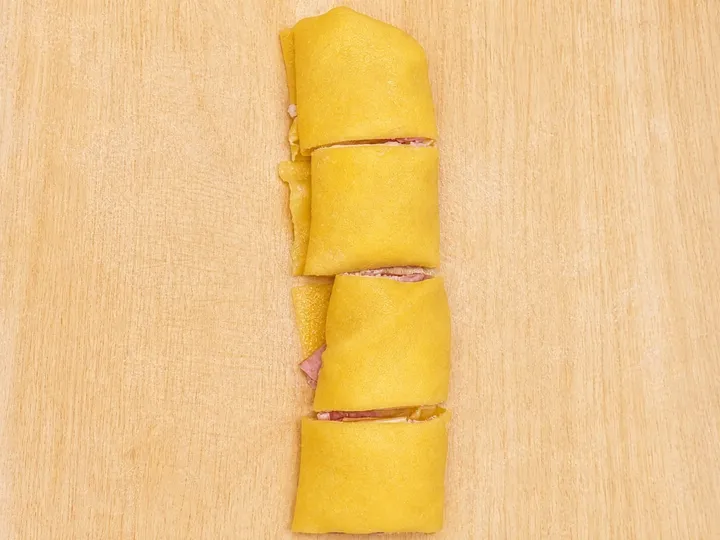
Take a square of pasta and spread it with a thin layer of béchamel, then add the ham, the fontina and a sprinkling of Parmesan. Roll the square up on itself and cut the roll into pieces 3 to 4 centimetres long.
-
Filling the dish
Take a baking dish of about 25 × 35 centimetres, butter the bottom and spread a thin layer of béchamel. Stand the pieces upright, packed tightly together: the spirals look like nests. With a spoon put a little béchamel inside each nest and use the rest to fill the gaps between them. Sprinkle generously with Parmesan.
-
Baking
Bake at 180 °C for about 25 minutes, and in any case until a nice golden crust has formed.
-
Serving
Let it rest for 8 to 10 minutes before serving.
Frequently asked questions
What other ingredients can I use for the filling?
You can add mushrooms, swap the cooked ham for mortadella, use mozzarella instead of fontina, or make a meatless «di magro» filling with ricotta and spinach.
Do I really have to blanch the pasta?
Absolutely. Blanched pasta is softer and more pliable and takes the filling without tearing; in the oven it finishes cooking together with the filling and the béchamel, which give it moisture. Unblanched pasta risks staying hard inside. And the salted water gives the pasta flavour.
Can nidi di rondine be made ahead?
Yes: assemble them the day before and keep them in the fridge until baking. They can also be frozen raw; before baking, leave them in the fridge for 24 hours.
Keep kneading
Similar recipes
 Baked pasta
Baked cannelloni with white ragù and béchamel
They roll into the oven and come out heroes
 Baked pasta
Lasagne verdi alla romagnola
Seven thin layers, the Sunday ragù and the oven on
 Gnocchi
 a sorpresa
Potatoes from the mountains and fish from the sea